
 By
By 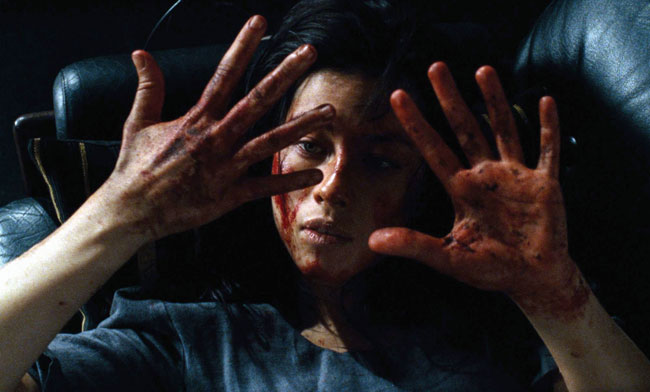
Few horror films from the 2000s have carved out a reputation as ferocious and divisive as Pascal Laugier’s Martyrs. Released in 2008, the French‑Canadian psychological horror quickly established itself as one of the most shocking films of the decade, earning walkouts at festival screenings and sparking arguments about the limits of screen violence.
At its core, Martyrs follows Lucie, a young woman traumatised by childhood abduction and torture, who believes she has finally found the people responsible. Her violent revenge sets off a chain of events that pulls her closest friend, Anna, into a far darker conspiracy. What begins as a brutal tale of trauma and vengeance evolves into something stranger and more metaphysical, pushing the film beyond the boundaries of conventional horror.
Laugier wrote Martyrs during a period of severe depression, determined to make a film “about pain” — not simply suffering, but the philosophical and spiritual dimensions of it. That ambition is what makes the film so controversial. While its graphic violence drew comparisons to Saw and Hostel, Martyrs is driven less by shock value than by a bleak, existential inquiry into transcendence.

The film’s secret society, convinced that extreme suffering can reveal the afterlife, subjects Anna to escalating torment in pursuit of revelation. This final act — a harrowing descent into ritualised brutality — is what cemented the film’s notoriety. French censors initially gave it an 18+ rating, and audiences at Cannes reportedly fled the theatre during its climax.
Yet Martyrs also earned passionate defenders. Some critics praised its thematic ambition, arguing that its extremity served a purpose: confronting the audience with questions about faith, martyrdom and the human capacity to endure. Scholars have since linked the film to debates around Catholic sainthood, existentialism and the ethics of witnessing suffering.
Laugier himself rejected the label of “New French Extremity,” but Martyrs is often cited as one of the movement’s defining works, a film that refuses to offer catharsis or traditional narrative logic. Instead, it leaves viewers shaken, forcing us to grapple with its implications long after the credits roll.
Over time, Martyrs has become a contemporary horror classic, appearing on lists from IGN and Rolling Stone celebrating the genre’s most significant works of the 21st century.
Its reputation remains fiercely polarised: for some, it is one of the most profound horror films ever made; for others, it crosses a line that should never be crossed. That tension — between philosophical ambition and visceral extremity — is precisely why Martyrs endures. It is not simply a controversial film; it is a challenge, a provocation, and a test of how far cinema can go when confronting the darkest corners of human experience.
Discover more on Top 10 Films
The 14 Most Controversial Movies Of The 2000s

From graphic realism to moral outrage, these 2000s films sparked fierce debate over censorship, sexuality and violence.