
 By
By 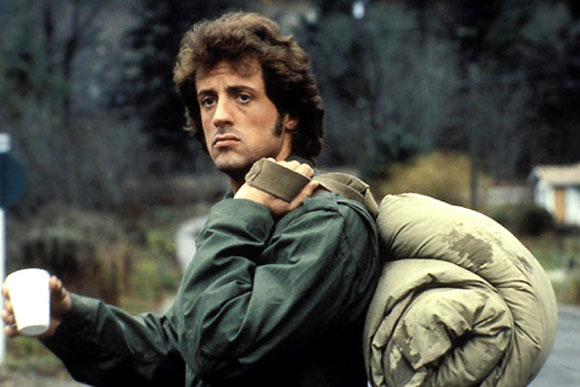
A great war‑veteran film doesn’t just show the battlefield, it shows the long shadow it casts when the fighting stops. Here we take a look at exactly that, spotlighting characters whose lives have been reshaped, broken or reborn by their military service.
From the quiet, haunted stillness of John Flynn’s cult favourite Rolling Thunder to the explosive spectacle of Simon West’s box office hit Con Air, these films reveal how veterans carry their past into every corner of their present. Some return home seeking peace; others find only ghosts, guilt or a fight they can’t walk away from.
The best films about war veterans boast an emotional complexity behind the action. For example, Tony Scott’s Man on Fire turns vengeance into a story of wounded humanity, while Gavin O’Connor’s Warrior and Clint Eastwood’s Gran Torino explore fractured families and the slow, painful work of redemption.
Others like Hal Ashby’s Coming Home remain landmark portraits of trauma and compassion. Together, these films show that the veteran experience is never one‑note — it’s a mix of resilience, rage, tenderness and transformation, making this collection a powerful journey through the many ways war lingers long after the uniform is gone.
10. Rolling Thunder
Dir. John Flynn (1977)

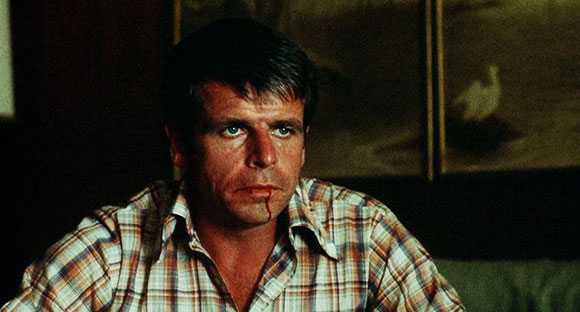
Rolling Thunder is one of Quentin Tarantino’s favourite films and remains a haunting depiction of war veterans through its eerie stillness of men who return from captivity profoundly changed.
Major Charles Rane (William Devane) comes home after seven years as a POW, greeted with parades, gifts and hollow celebration. However, he moves through it all like a man carved from stone. When a violent home invasion destroys what little life he has left, Rane’s military discipline and emotional numbness harden into a relentless drive for revenge.
Rane’s quiet routines, his inability to reconnect with family, and his bond with fellow ex‑POW Johnny Vohden (Tommy Lee Jones) give the story a depth beyond its brutal set‑pieces. As Rane sharpens his prosthetic hook and tracks down the men who destroyed his world, Rolling Thunder becomes a stark exploration of how war reshapes identity, and how violence can feel like the only language a broken veteran has left.
9. Con Air
Dir. Simon West (1997)

Fresh out of prison for an act of self‑defence, former Army Ranger Cameron Poe (Nicolas Cage) finds himself trapped on a transport plane hijacked by a bunch of dangerous convicts.

While the criminals revel in chaos, Poe’s military training and wholesome, good-guy traits make him the lone stabilising force, determined to protect the innocent people onboard, save his diabetic friend, and get home to his family. Con Air may be gleefully over‑the‑top, but its veteran hero gives the madness a beating heart.
8. Man On Fire
Dir. Tony Scott (2004)

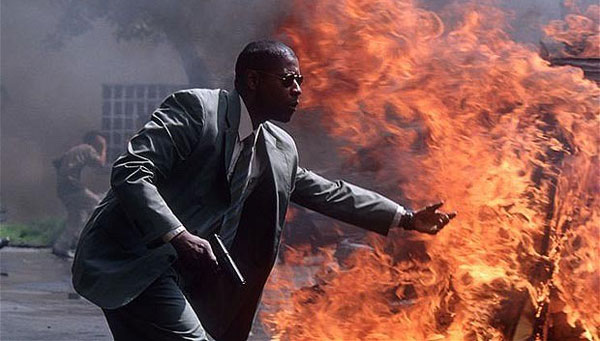
Tony Scott’s Man on Fire earns its place among the most compelling films about war veterans because its emotional core rests entirely on the damaged humanity of Denzel Washington’s John Creasy, a former Force Recon Marine and CIA operative drowning in guilt.
When Creasy takes a bodyguard job in Mexico City, he’s a man on the brink and convinced he’s beyond redemption. His bond with young Pita Ramos (Dakota Fanning) becomes the film’s heartbeat, pulling him back toward purpose as he trains her with the discipline of a soldier and protects her with the ferocity of a man who has already lost too much. Creasy stands out because he embodies the veteran’s paradox: lethal skill paired with profound moral injury.

It’s Washington who takes Man on Fire and elevates it above typical action-gangster-vengeance tropes. His performance gives the character a bruised tenderness that makes his violent crusade feel tragic rather than triumphant. As Creasy tears through Mexico City’s corrupt underworld to rescue Pita, the film becomes a study of a veteran confronting his past through sacrifice rather than revenge.
7. The Guest
Dir. Adam Wingard (2014)

The Guest transforms the returning‑soldier archetype into something eerie and unpredictable. David Collins (Dan Stevens) arrives at the home of the Peterson family, who are dealing with the loss of their son Caleb in the war in Afghanistan, as a polite, soft‑spoken former Army sergeant paying respects to a fallen comrade. However, his calm exterior masks something deeply wrong.
His emotional detachment and unnerving protectiveness make him a standout veteran character, one whose training has been twisted into something dangerous. The tension comes from watching a family welcome a man who seems helpful, yet radiates quiet menace.
Director Adam Wingard blends action, horror and dark humour into a sharp, stylish thriller anchored by Stevens’ magnetic performance. As David’s true nature emerges — a product of secret experiments and lethal conditioning — the story shifts into full conspiracy mode without losing its playful genre edge. The Halloween setting and escalating paranoia give The Guest a unique flavour, making it one of the most inventive modern takes on the veteran‑returns‑home narrative.
6. Warrior
Dir. Gavin O’Connor (2011)

A haunted Marine returning from the Middle East, Tommy Conlon (Tom Hardy) carries the weight of guilt and unresolved family wounds into the MMA cage. His ferocity in the ring — knocking out opponents with frightening speed — comes from a place of pain rather than glory.

Director Gavin O’Connor , who was inspired by the real-life heroics of U.S. Marine G.P. Pennington, mixes bruising fight drama with a deeply human story of reconciliation in Warrior. Brendan (Joel Edgerton), Tommy’s brother, fights for financial survival, while Tommy fights to silence the past. What’s striking is how the film refuses to choose a favourite.
Their final showdown becomes a cathartic release of years of anger and regret. Strong performances, emotional honesty and grounded depictions of veterans struggling to rebuild their lives make Warrior far more than a typical sports movie: it’s a powerful portrait of family, forgiveness and the long shadow of war.
5. Dead Man’s Shoes
Dir. Shane Meadows (2004)

Richard (Paddy Considine), an ex‑Paratrooper, returns to his Derbyshire hometown to confront the gang of petty criminals who tormented his vulnerable younger brother Anthony. Writer-director Shane Meadows frames Richard’s march through suburban wasteland like a soldier on a final mission: kitbag slung over his shoulder, beard grown out, eyes fixed on justice. Richard is a compelling character because his military discipline fuses with deep personal guilt, creating a veteran whose trauma is as frightening as his capability.

Dead Man’s Shoes sees Meadows bringing together a variety of genre elements from revenge thriller and rural British horror to social realism, to explore how violence corrodes even righteous intent. Richard’s campaign against the gang is brutal, but the monochrome flashbacks of Anthony’s abuse reveal a grief that drives him beyond reason. And, crucially, Considine is unforgettable. He displays a cold, unwavering intensity, making his final act of self‑destruction both shocking and strangely tender.
4. Born On The Fourth Of July
Dir. Oliver Stone (1989)

Born on the Fourth of July is one of the most powerful films about war veterans through its focus on Ron Kovic’s journey from patriotic Marine to disillusioned activist. The film charts his journey from small‑town patriotism to the chaos of Vietnam, where a devastating injury and a tragic battlefield mistake leave him paralysed and burdened with guilt. Kovic’s physical and psychological collapse makes him a uniquely powerful veteran figure — someone whose belief in service is broken from the inside.

Oliver Stone’s film traces how Kovic turns his pain into purpose. His struggles with inadequate medical care and alienation at home, in addition to the corrosive effects of trauma gradually push him toward activism, giving his story a sense of hard‑won moral awakening. Tom Cruise’s performance captures both the rage and vulnerability of a man rebuilding his identity from ruin. It’s a film that confronts the cost of war with honesty, empathy and unforgettable dramatic force.
3. First Blood
Dir. Ted Kotcheff (1982)

John Rambo (Sylvester Stallone), a former Green Beret drifting through civilian life, is pushed into crisis when a small‑town police force humiliates and brutalises him. First Blood follows his escape into the wilderness, where his combat training and survival instincts take over.

The film treats Rambo not as an unstoppable action hero but as a damaged man reacting to a world that no longer understands him. His flashbacks, restraint in the face of violence, and desperate attempts to avoid further harm give the character emotional weight beneath the spectacle.
The forest pursuit sequences are tense, grounded and surprisingly empathetic, making First Blood a rare action film that genuinely explores the cost of war on the individual.
2. Gran Torino
Dir. Clint Eastwood (2008)

Clint Eastwood’s Walt Kowalski in Gran Torino is a gruff Korean War veteran and retired autoworker. He is a man fortified by prejudice and routine. He also has an ironclad sense of territorial pride. Recently widowed and estranged from his family, Walt spends his days guarding his porch and his prized 1972 Gran Torino.
When his young Hmong neighbour Thao is coerced into stealing the car as part of a gang initiation, Walt’s instinctive fury gives way to an unexpected bond. Beneath the scowls and slurs lies a man whose wartime trauma still governs his worldview, making Walt one of cinema’s most layered veteran characters.

Walt’s eventual mentorship of Thao, his growing affection for the Vang Lor family, and his confrontation with the violence consuming their neighbourhood reveal a veteran wrestling with guilt, his own mortality, and the possibility of change.
Undoubtedly one of the best Clint Eastwood films, his performance — all clenched jaw, gravelled growl, and buried regret — gives Walt a mythic weight. It’s a rare film that treats a veteran’s journey not as a patriotic arc, but as a human one.
1. Coming Home
Dir. Hal Ashby (1978)

Coming Home remains one of cinema’s most affecting portraits of war veterans because it roots the trauma of Vietnam in intimate, human change rather than battlefield spectacle. Jane Fonda delivers one of her best performances as Sally Hyde, a dutiful Marine wife whose worldview is shaped entirely by her husband’s loyalties. When he ships out to Vietnam, Sally’s carefully ordered life loosens: she buys a sports car, rents a beach house, and volunteers at a VA hospital.

There she meets Luke Martin (Jon Voight), once a confident high‑school football captain, now a paraplegic veteran raging against his pain, his country’s decisions, and the indignities of life after combat. Their relationship — tentative, tender and transformative — becomes the emotional core of the film. Luke’s vulnerability, anger, and gradual rediscovery of purpose make him one of the most compelling military veterans, a man whose physical paralysis contrasts with his growing moral clarity.
Crucially, Coming Home boasts a rare honesty. The brilliant Hal Ashby refuses melodrama, instead showing the raw realities of paraplegic veterans: spilled urine bags, over‑medication, institutional neglect, and the slow, painful work of reclaiming dignity.

In addition, Sally’s awakening mirrors Luke’s — she learns to question authority and challenge her own assumptions. She recognises the human cost of the war her husband fights. Their friendship and romance are handled with sensitivity, confronting disability and sexuality as well as emotional need without exploitation. It’s this combination of politically-charged character depth and unflinching compassion that makes Coming Home not just a great film about war veterans, but one of the most humane American dramas of the 1970s.
Discover more on Top 10 Films
10 Great Films About British Soldiers, Ranked

From Victorian battlefields to modern minefields, we rank the ten greatest films about British soldiers that capture the grit, humour and heart of the squaddie.
FAQ
What defines a great war‑veteran film?
A great veteran‑led film goes beyond combat, focusing on how service reshapes identity, relationships and morality. These stories explore trauma, resilience and the struggle to rebuild a life after war.
Why do these films span so many genres?
Veteran experiences are varied, so filmmakers use drama, action, thriller, horror and even dark comedy to capture different emotional truths — from revenge and guilt to healing and redemption.
Which veteran characters stand out most?
Figures like Luke Martin, Walt Kowalski, John Creasy and Charles Rane resonate because they’re complex, flawed and deeply human, each wrestling with the lingering impact of service.
Why revisit these films today?
They remain relevant for their honesty about trauma, their empathy for those returning from conflict, and their ability to spark conversations about duty, recovery and the cost of war.