
 By
By The 1980s are frequently romanticised as a golden era of neon aesthetics, synthesiser soundtracks, popcorn-friendly blockbusters, and epic sequels. Yet beneath the decade’s glossier, chart-topping exterior lay a world of cinematic cynicism, where ambitious filmmakers pushed the boundaries of suspense, psychological dread and neo-noir.
Tragically, many of these uncompromising visions were outright ignored by contemporary audiences, crushed under the wheel of happier, escapist box office titans. These box office disasters were often simply too bleak, too experimental, or too ahead of their time for a public craving easy resolutions.
We take a look at ten cinematic casualties that deserve to find a wider audience. From the sun-splashed, post-Vietnam paranoia of Cutter’s Way to the heart-stopping, real-time nuclear dread of Miracle Mile, these films trade mindless spectacle for genuine psychological gravity.
Within these gritty thrillers there are several brilliant performances that have unfortunately fallen through the cracks including one of Morgan Freeman’s best turns in Street Smart opposite Christopher Reeve and Christopher Walken’s cruel patriarch in At Close Range.
Whether expanding the boundaries of the genre like the body-snatching sci-fi thriller The Hidden or stripping it down to its claustrophobic bones like the forgotten highway-noir Cohen and Tate, each of our forgotten gems are worthy of your attention.
Cutter’s Way
Dir. Ivan Passer (1981)

As far as gritty 1980s thrillers go, Cutter’s Way is about as sour as they come. Released in 1981, it was an immediate box office casualty, clawing back only $1.7 million against a reported budget of $5 million. To many it felt like a relic of the cynical 70s, arriving just as Reagan-era optimism was beginning to take hold.
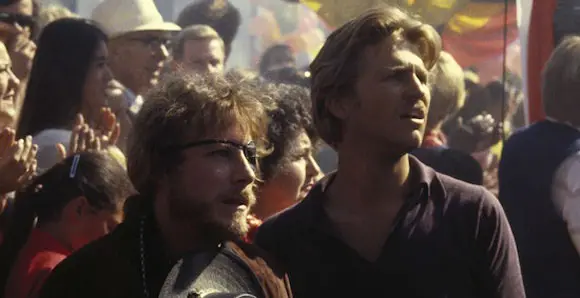
The story begins in a rain-soaked Santa Barbara alley where Richard Bone (Jeff Bridges), a drifter and country-club gigolo, witnesses a body being dumped. While Bone is hesitant to get involved, his best friend Alex Cutter (John Heard) — a physically and mentally scarred Vietnam veteran fuelled by an unquenchable, booze-soaked rage — becomes convinced that a local oil tycoon is the culprit.
Cutter’s Way refuses to play by traditional thriller rules. It’s a beautifully shot, sun-drenched nightmare about the dazed survivors of the 60s hitting rock bottom. It portrays a trio of broken souls living on the periphery of the American Dream, including a standout, heartbreaking performance by Lisa Eichhorn as Cutter’s weary wife.
The film subverts typical genre expectations by trading easy resolutions for a biting script and a climax that remains one of the most discussed shock endings in cinema. It’s both a slow-burn study of paranoia and a bleak look at class resentment that requires patience. But if you stick with it, you’ll get the rewards. Director Ivan Passer, who also made 1971’s Born to Win, delivers a film that doesn’t just depict hitting bottom; it explores the psychological rubble found there.
52 Pick-Up
Dir. John Frankenheimer (1986)

John Frankenheimer fans will know all about 1986’s 52 Pick-Up, a neo-noir that got lost at the box office but has since built quite the cult following. Steeped in sleaze, the film follows Roy Scheider’s Harry Mitchell, a wealthy industrialist whose life unravels when a trio of ruthless extortionists targets him with evidence of an extramarital fling.
When Mitchell refuses to be bullied and removes the criminal gang’s trump card — by revealing his transgressions to his wife — they raise the stakes by killing his girlfriend and framing him for her murder.

Driven by a razor-sharp script based on an Elmore Leonard book, the movie features a chilling standout turn by John Glover as the charismatic villain, Alan Raimy. It’s a film that takes an ordinary man into a filthy underworld to protect his freedom, and explores the psychological toll of desperation.
Street Smart
Dir. Jerry Schatzberg (1987)

Street Smart grossed just over $1.1 million at the box office. It was made for $6 million budget. Despite that, it earned the respect of many critics at the time, with many citing its piercing study of how far people will go when their livelihood and liberty are on the line.
It follows a struggling writer, played by Christopher Reeve, who fabricates a deep-dive profile of a charismatic pimp to save his career. The scheme backfires when the legal system identifies a real-life criminal as the inspiration for the piece. Suddenly, the reporter is trapped between a relentless prosecutor demanding his sources and a terrifying felon who sees the fake story as his only ticket to freedom.
Morgan Freeman is the standout here. His portrayal of the volatile street boss — Leo “Fast Black” Smalls, Jr. — earned him his first Academy Award nomination. He brilliantly transitions from charm to genuine lethality with terrifying ease, outshining the film’s more satirical elements.
While the plot occasionally leans into genre tropes, the interpersonal dynamics — specifically the harrowing pressure placed on the reporter and the women caught in the middle — provide a level of intensity rarely seen in mainstream cinema.
Cohen And Tate
Dir. Eric Red (1989)

Cohen and Tate is part of a subgenre that’s been called the highway noir. In it a young boy is abducted from an FBI safe house by two professional assassins after witnessing a high-level mob hit. The film takes place almost entirely over a single night as the trio drive towards Houston. During the journey the child realises his only hope for survival is to manipulate the clashing personalities of his captors. One is an icy, seasoned professional played by the brilliant Roy Scheider, and the other is a volatile, unhinged psychopath played by Adam Baldwin in one of his best roles.
Writer-director Eric Red does a great job stripping this lean thriller back to its bones. It was probably too bleak for audiences when it was first released and made only $65,000 at the box office. The always dependable Scheider delivers a commanding, detached performance as the veteran killer, and the film refuses to shy away from the brutality of its premise, placing its young protagonist in a state of constant peril. Red’s script prioritises tension over typical action tropes, exploring the psychological warfare between two men who have nothing in common except their deadly occupation.
Roadgames
Dir. Richard Franklin (1981)

This Australian 1981 production transports the suspense of a classic Hitchcockian cat-and-mouse game to the outback. Despite its star-studded cast, the film was a massive financial disaster, recovering a meagre $100,000 Australian dollars against its A$1.75 million budget due to misleading promotion that promised a cheap slasher flick.
Instead, Roadgames follows an eccentric, poetry-quoting truck driver, played by Stacy Keach, who begins to suspect a motorist is a serial killer. Alongside a hitchhiking diplomat’s daughter (Jamie Lee Curtis), he embarks on a dangerous highway pursuit to expose the truth while trying to avoid becoming the prime suspect.
Rather than relying on standard gore, the movie builds a quirky, atmospheric tension fuelled by the stellar chemistry of its leads. It plays out like an offbeat road adventure wrapped inside a psychological mystery, featuring sharp dialogue and slow-burn suspense.
Nighthawks
Dir. Bruce Malmuth (1981)
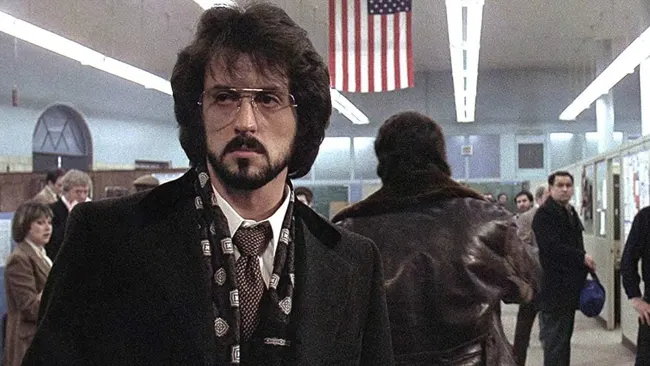
Nighthawks was by no means a box office disaster. It made a profit. Actually, it almost quadrupled its budget at the box office. But Sylvester Stallone’s star power was well and truly established following Rocky II’s appearance two years prior to Nighthawks landing in cinemas. So, its sub-$20 million dollar return compared to the $200 million Rocky’s sequel secured was considered somewhat of a disappointment.
A downbeat and complex police procedural, the 1981 film follows Stallone’s Deke DaSilva, an on-the-edge undercover investigator trying to put criminals behind bars while navigating a fractured marriage in a grimy, crime-ridden Manhattan. Things get further complicated when an international terrorist brings a campaign of violence to the city, forcing the officer into a psychological game of cat-and-mouse.
One of the great things about Nighthawks is how it captures the decaying landscape of the era with an authentic, shadowy grain that echoes the best crime cinema of the previous decade. Rutger Hauer delivers an electrifying turn as the chilling antagonist, serving as the perfect foil to Stallone’s uncharacteristic vulnerability and self-doubt. It is a taut, character-driven thriller that subverts expectations, boasts genuine tension and has a highly rewarding final confrontation.
The Hidden
Dir. Jack Sholder (1987)

The Hidden, a science-fiction hybrid that injects a brilliantly bizarre twist into the traditional buddy-cop formula, begins with a shockingly aggressive bank heist and a chaotic pursuit through city streets. A conventional detective is tasked with stopping a spree of random, highly violent offenses committed by everyday citizens who seem impervious to gunfire. The investigation grows stranger when a peculiar federal investigator arrives, revealing that the real culprit is a body-snatching extraterrestrial moving between human hosts.
Produced on a modest budget of $4.5 million, its eventual domestic return of under $10 million left it largely unnoticed by mainstream moviegoers during its initial theatrical run. But it’s definitely worth seeing thanks to its clever genre disguise. You think it’s just your standard police procedural until the inventive, high-octane sci-fi drama kicks in. Kyle MacLachlan provides a wonderfully subtle performance as an eccentric agent while Sholder’s direction effortlessly balances genuine suspense with dark comedy.
The Caller
Dir. Arthur Allan Seidelman (1987)

The Caller never got a theatrical release. It was showcased at the Cannes Film Festival in 1987 but didn’t gain much interest. Finding itself in limbo, it quietly made its way to VHS in 1989. It’s a film that never found its audience but deserves to do so.
In it, an unnamed woman (Madolyn Smith) arrives at a secluded forest cabin, shadowed by an unseen observer. Her evening is interrupted during a heavy storm by a mysterious visitor, played by Malcolm McDowell, who claims his vehicle has failed nearby. What follows is a tense, claustrophobic chamber piece that plays out with the surreal, dreamlike energy of a classic television anthology episode.

With a cast of just two people, The Caller rests entirely on the chemistry and mounting suspicion between the leads, who masterfully blur the lines between victim and predator. It eschews traditional slasher violence in favour of dialogue-driven psychological dread and an eerie atmosphere, and boasts a brilliantly bizarre final twist that will completely reframe everything you just watched.
Miracle Mile
Dir. Steve De Jarnatt (1988)

This 1988 apocalyptic thriller perfectly captures the overwhelming dread of a late-night waking nightmare. Produced for around $4 million, the film collapsed at the box office, grossing just $1.1 million as audiences resisted its harrowing, high-stakes premise. Miracle Mile begins as a gentle romance in Los Angeles when a musician misses a date with a waitress. While waiting outside her diner, he answers a ringing payphone and intercepts a frantic transmission from a silo worker stating that atomic missiles are hitting the city in less than an hour.
The film has a frantic, real-time pace and an agonising ambiguity as it plunges a sleeping metropolis into absolute chaos and civil unrest as word of the impending strike leaks out. It mirrors a surreal descent into madness, following Anthony Edwards’ Harry Washello through a disorganised cityscape as he desperately attempts to rescue his new love (Mare Winningham) before the deadline expires.
At Close Range
Dir. James Foley (1986)

This 1986 rural crime drama offers an exceptionally bleak examination of toxic family loyalty and betrayal. Despite featuring two massive lead stars, the film’s slow-burn plotting and downbeat tone didn’t inspire audiences to see it in cinemas. It made a commendable $2.3 million but cost $6.5 million to make.
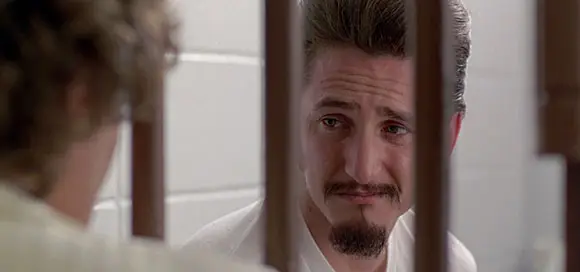
Set in the impoverished hills of Pennsylvania, the true-story drama tracks a bored, impoverished teenager, played by Sean Penn, who drifts into the orbit of his estranged father. He seeks purpose and affection by joining his father’s sophisticated tractor-theft ring, completely unaware that his patriarch is a cold-blooded sociopath who values self-preservation above his own flesh and blood.
This overlooked James Foley effort sees Christopher Walken deliver a legendary, terrifying turn as the gang leader, effortlessly transitioning from magnetic charm to absolute malevolence. Rather than relying on standard Hollywood action tropes, the film plays out like a classic tragedy, capturing the claustrophobia of poverty and the slow, inevitable slide of ordinary misfits into horrific violence. It is a visually striking, emotionally punishing masterpiece of American neo-noir that lingers in the mind long after the credits roll.
Discover more on Top 10 Films:
10 Essential Films By Directors Better Known As Actors
Directors’ relationships with their actors are crucial to creating an environment where performers can achieve their potential. In this top 10, I look at great films directed by actors who have stepped behind the camera.
Frequently Asked Questions
Why did so many of these exceptional thrillers fail commercially when they were first released?
The 1980s marked a massive cultural shift toward escapist entertainment, high-concept blockbusters, and optimistic, feel-good narratives. Many of the thrillers on this list — like Cutter’s Way and At Close Range — carried a cynical, downbeat tone reminiscent of 1970s cinema. Because they dealt with heavy themes like post-war trauma, poverty, and moral decay, they were incredibly difficult for studios to market to audiences who preferred the escapism of Top Gun or Back to the Future.
Are these films considered “slasher” or traditional horror movies?
No, though several were mistakenly marketed that way. For example, Roadgames was heavily promoted as a standard “slice ‘n’ dice” horror film because it starred “Scream Queen” Jamie Lee Curtis, which alienated audiences looking for a traditional psychological mystery. While a few entries mix in genre-bending elements — like the sci-fi body-snatching in The Hidden or the nightmare surrealism of The Caller — they are primarily driven by psychological dread, suspense and character-focused tension rather than typical horror tropes.
What makes Sylvester Stallone’s Nighthawks a box office “disappointment” if it actually made a profit?
Box office success is heavily relative to star power. By 1981, Stallone was a monumental Hollywood draw following the massive financial triumph of Rocky II, which brought in over $200 million. While Nighthawks grossed nearly $20 million against its $5 million budget, it was viewed as a commercial letdown by the studio because it failed to capture that same mainstream, lightning-in-a-bottle momentum. Today, however, it is celebrated precisely because it features a more vulnerable, grounded performance from Stallone before he became an untouchable action caricature.
Where can I watch these forgotten 1980s gems today?
Because many of these films have achieved legendary cult status, they are much easier to find now than they were during the VHS era. Several of the more minimalist or independent titles, such as The Caller, frequently stream on free, ad-supported platforms like Tubi or Pluto TV, and is now available on VOD via Amazon Prime. The more star-studded titles, including 52 Pick-Up, Miracle Mile, and At Close Range, are regularly available to rent on major digital platforms including Apple TV or have received high-quality boutique physical media releases from labels like Shout! Factory, Arrow Video, or Kino Lorber.