
 By
By 
London with fangs – the city baring its bloodied teeth to show its darker side. These are movies in which London is clouded in a metaphorical shadow; where murder and mayhem feed the emotional defaults of suspicion, paranoia, anger and fear.
The Dark Side of London isn’t concerned with law and order, rather this is a city of egos and arrogance, of megalomaniacs and sociopaths, of the discarded and the misspent, the haves and the have-nots.
Films depicting London’s darker side

Photo by Tom Rogers on Unsplash
Here we take a look at 10 movies which paint the city of London in a darker light. Whether it’s the futuristic flooded city of Split Second, the stage for fantasy and horror in An American Werewolf in London, or a haven for gangsters to play out their power struggle games in films like David Cronenberg’s Eastern Promises, we witness a city wreaked by fear.
10. Split Second
Dir. Tony Maylam (1992)

Set in a dystopian London beset by flooding, a Riggs and Murtaugh pairing – here displayed by Rutger Hauer and Scottish actor Alastair Duncan – investigate brutal, ritualistic murders caused by an entity who Hauer’s belligerent, embattled Harley Stone has a strange psychic link to. Thankfully, Duncan’s studious rookie Dick Durkin knows all about this sort of thing and is therefore the perfect partner to offer fodder for Stone’s baiting and exposition for an audience trying to work out what the hell is going on.

This does all culminate in Split Second enjoying an offbeat charm. As an unashamed re-tread of the action-horror genre’s clichés, it’s a nostalgic reaction to a host of 1980s hits like Predator and Aliens that, with the sight of a cigar-sporting Rutger Hauer and his ever-increasing portfolio of big guns, is easy to be entertained by. Especially for fans. That it then mixes a blood-coated public bathroom and disembowelled victim with Dick Durkin explaining the secret to good health is a five-mile run and sex every morning, reveals Split Second finding ways to distinguish itself. Even if the combination of comedy and horror feels like an incongruous union between Lethal Weapon and Alien, it offers directors Maylam and Sharp’s effort an odd yet curious distinction.

Certainly, the sight of London dressed as an underwater city is admirable even if it feels more like an American locale (dialogue refers to city “blocks” and the police look like they’ve been lifted from Paul Verhoeven’s Detroit in Robocop). The same can be said of the film’s justification for its flooded, perennially dark dystopia which enjoys a compelling if flimsy nod to the impact of global warming. Director of photography Clive Tickner does a great job of realising an urban landscape engulfed by night and fear; utilising industrial locations to paint an unforgiving, unwelcoming picture of steel and concrete that, from time to time, is bathed in bright red blood.

Despite Split Second’s shortcomings, it does manage to unnerve with its austere setting and some well-orchestrated set pieces. The fleeting sight of the killer – a blackened shape rising from the sewers – keeps the villain fittingly ambiguous while some neat POV shots present a voyeuristic view of its prey. And the finale in an abandoned underground station satisfyingly ups the ante. That the humour and horror don’t live harmoniously actually befits the film’s obscure sensibilities. It makes Split Second an oddly compelling distillation of the problems that brew when too many cooks stir the pot.
9. Harry Brown
Dir. Daniel Barber (2009)
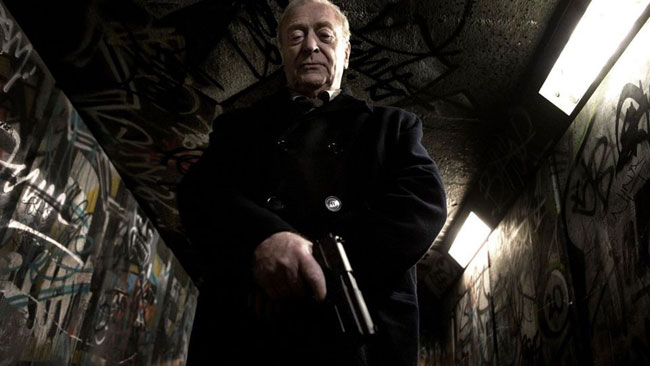
The subway scenes were shot at Marks Gate, London.
Harry Brown (Michael Caine) is an elderly ex-military widower living in a downtrodden housing complex somewhere in London. His wife has recently died and he still mourns the death of his only daughter. He only has Leonard (David Bradley), his best friend, to confide in, often meeting him at the local pub to play chess and put the world to rights.
But violence is escalating in the neighbourhood and Leonard begins to carry a large knife for protection. When Leonard is driven to retribution after youths put a fire bomb through his letterbox, he is murdered, leaving Harry all alone on the estate.

The film was shot mainly in and around the abandoned Heygate Estate in Walworth, London. At the time of filming, it was due to be demolished, which did not happen until early 2014.
Director Daniel Barber’s debut feature film is another in an increasingly populated sub-genre depicting modern day urban decay in British cities. Here it is London that bares its bloodied fangs. As a depiction of the country’s ASBO youth, the out of control teenagers and twenty-somethings that have nothing better to do than deal and use drugs while harassing the peaceful locals, the film is uncompromising.

The opening – defining the film as the product of its time – recalls the awful happy-slapping videos that rose to prominence in the mid-2000s. Here a youth is initiated into a gang. We are then treated to a pair of out of control children shooting a pistol at a mother pushing a child in a pushchair. The woman is hit in the head, a disturbing event in itself made more unnerving as the culprits escape on a motorbike and are hit and killed by a passing car. Barber is relentless and damning.
8. The Firm
Dir. Alan Clarke (1989)
For some in Britain, the 1980s will be remembered as the period of the football hooligan; violent young men muddying the beautiful game’s image during a period when English football endured more than its fair share of tragedy and unwelcoming notoriety. It wasn’t just the hooligans tarnishing football’s image, the Bradford stadium fire of 1985 killed 56 because of antiquated stands that were not fit for purpose, and the Hillsborough disaster four years later saw 96 killed as a result of overcrowding due to police failures.

Thamesmead in London | IMAGE: ReelStreets.com
For those not directly affected by the aforementioned tragedies, from casual fans to die hard supporters, it’s the Heysel Stadium disaster that sticks in the memory. In the 1985 European Cup Final between Juventus and Liverpool, 39 people were killed and around 600 injured when hostilities between rival supporters turned violent. When Liverpool fans charged across a neutral area of the stadium, Juventus fans were pushed back against a concrete retaining wall. Here, many were crushed before the wall eventually collapsed. The event saw English football clubs banned from UEFA competitions, meaning no more European football during the second half of the 1980s. It has been described as the “the darkest hour in the history of the UEFA competitions” and the highest profile instance of English football hooliganism.

Dominic and Aitch make their way to the station on Grays Inn Road | IMAGE: ReelStreets.com
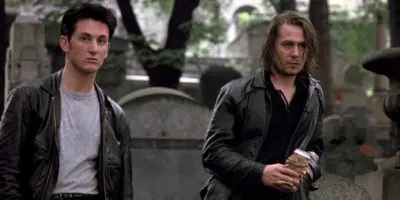
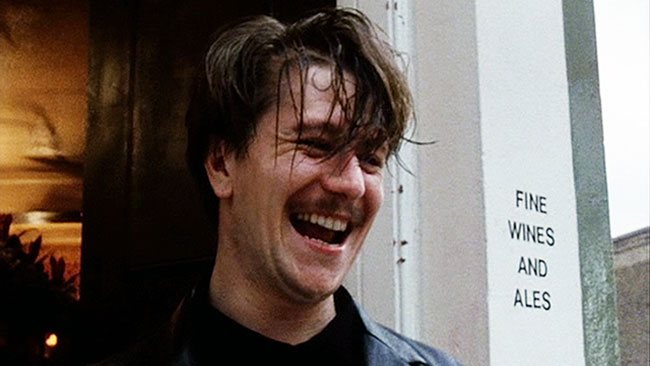
The problem was highlighted in Alan Clarke’s 1989 film The Firm starring Gary Oldman. A violent, uncompromising and characteristically bleak piece of social realism, the director was keen to redirect attention away from football and onto the perpetrators of hooliganism. The film suggests that football is the victim. These angry young men “hitting each other” for entertainment is indicative of their pursuit of happiness – a “buzz” says Oldman’s master hooligan Bexy – outside of their domestic normality and largely affluent suburban existence. It’s actually quite fascinating to see another side of the 1980s “yuppie”, one getting his kicks out of bloodying the nose of his fellow man.

King’s Cross railway station | IMAGE: ReelStreets.com
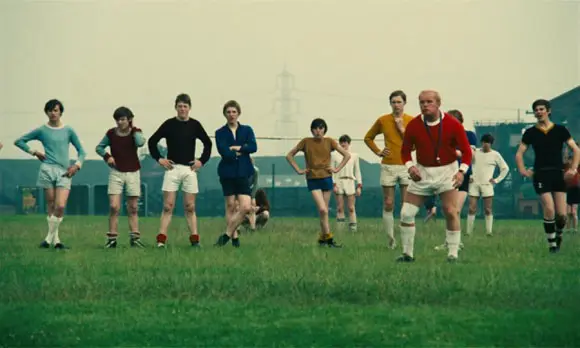
Cleverly Clarke shows us very little actual football aside from Bexy playing for his amateur team when a rival gang leader (the excellent Phil Davis) drives across the field after covering a fellow hooligan’s car with graffiti. Violence is not a symptom of football but tribalism and a sense of identity certainly is. What’s striking is that football hooligans of the late 1980s are depicted here as suit and tie-wearing family men who organise their fights at lavish hotels not skinheads with a racist agenda.

The Prince of Wales at the junction of Wellington Row and Barnet Grove | IMAGE: ReelStreets.com
Rightly not offering an underlying cause, The Firm does however provide some interesting ideas. Perhaps, unlike those poor, penniless folk on their council estates, who turn their anger to authority and the government thanks to being kicked by recession, privatisation and a lack of opportunity, affluent family men who have found financial and personal success as well as – broadly speaking – happiness, must manifest a villain to target their aggression?
7. Naked
Dir. Mike Leigh (1993)

A sharp and powerful dissection of class and society in 1990s Britain sees Johnny (David Thewlis) leave England’s north-west for London where he throws his perceived intellectual superiority at anyone who happens across his path.

This egotistical and sadistic individual avoids being completely hated by the audience through his dogged determination to make sense of the infinitely complex world around him.
6. Fish Tank
Dir. Andrea Arnold (2009)

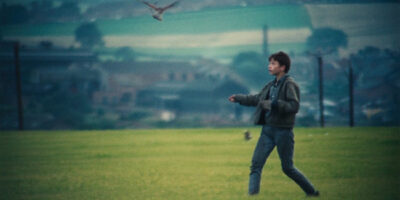
Ostensibly a domestic “sink estate” drama, what’s most surprising about Andrea Arnold’s Fish Tank is the corrosive emotional intensity she draws out of her teenage protagonist’s various personal dilemmas. Intimately framed in the Academy ratio, the director herself has talked about the squarer format’s inherent ability to draw the audience into personal conflict and character. It’s an approach that underlines her focus, the camera never leaving actor Katie Jarvis’ side, her role as isolated teen Mia Williams laid bare warts and all.

Indeed, Michael Fassbender’s handsome Conor O’Reily – with his beguiling Irish accent – asks her in one of the film’s many simple but significant moments if Mia has ever washed her feet when helping tend to a cut on her ankle. He’s her mother’s new boyfriend, I assume the latest in a long line of male partners, and one who immediately catches Mia’s eye. His masculinity contrasts the all-female home from which Mia finds herself living; a relaxed charm, wide-eyed intelligence and calm manner very different to her living room wars with neglectful mother Joanne (Kierston Wareing) and sibling rivalry with precocious, foul-mouthed, younger sister Tyler.

Arnold’s approach is to maintain our attention on Mia throughout. We therefore see the world as she sees it; angry and disenfranchised, at once desperate for escape but internalised by an acceptance of her lot in life. She finds expression through small-scale squabbles and an enthusiasm for street dance, secretly practicing in an abandoned apartment block on the estate. It might be suffocating if it were not so compelling. Mia’s assertive, self-defiance is a commendable, sympathetic trait made more appealing by Jarvis’ subtly effective performance that enlivens a sense of ambiguity in her actions and motivation.
It culminates in a brilliant final third. Arnold showcases an ability to tie the strands of Mia’s story together through a genuinely gripping finale that remains faithful to the grit and grime of the teenager’s environment while underlining her enigmatic impulses that highlight both youthful recklessness and intelligence beyond her years. Indeed, there’s a lovely metaphor involving an aging horse on a traveller’s site. Mia tries to free the animal but is assaulted by its owners. It befits the girl’s predicament; her escape constricted by the intangibles outside her control.
Top 10 Films By British Female Directors Since 1990
5. Eastern Promises
Dir. David Cronenberg (2009)

A British gangster movie about Russian mobsters in London, Eastern Promises is written by Peaky Blinders creator Steven Wright and directed by the visionary filmmaker, David Cronenberg. The film sees the death of a pregnant teenager during child birth set off a chain of events that leads an idealistic midwife (Naomi Watts) into a criminal underworld.

Eastern Promises starts in typical David Cronenberg fashion. As a Russian Mafiosi is getting his hair cut in a small salon, a mentally disabled man walks in and starts talking to the hairdresser. The three men are the only people in the salon. The hairdresser asks the man to shave the customer. He hands him the razor blade. Suddenly the man bursts into rage, taking the razor to the customer’s throat and slicing it from ear to ear with blood gushing in breathless detail. This is our introduction to the Russian criminal underworld in London.
4. Mona Lisa
Dir. Neil Jordan (1986)
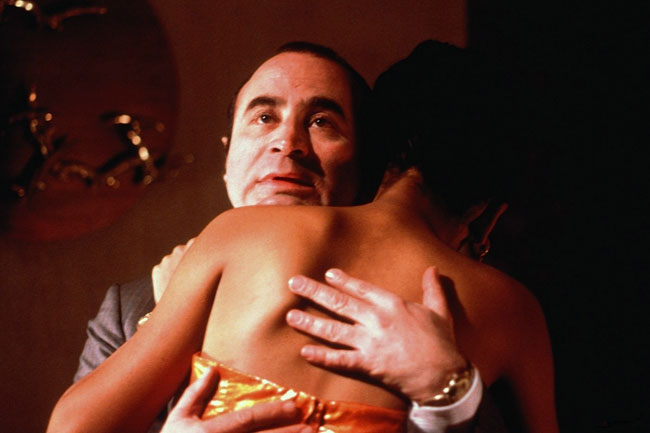
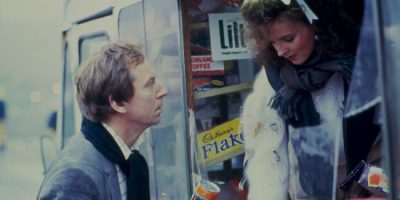
Bob Hoskins plays George, an ex-convict and small-time gangster who, having gone to his former boss for work, finds himself entangled in the dangerous life of an enigmatic high-class call girl (Cathy Tyson). Despite his initial reservations about her, he begins to fall in love and when she asks him for help finding a missing prostitute, he agrees only to find he’s pulled into a sordid world of pimps and low-level goons.
A compelling, unsettling depiction of obsession and myth, Mona Lisa takes place in a bleak, murky irredeemably corrupt world. Both gangster thriller and offbeat love story, Neil Jordan intelligently frames his exploration of class, race and sexuality around the grey hue that hangs over Thatcher’s Britain. What emerges from the rot is George’s antihero credentials as this long-time thug finds redemption.
3. Peeping Tom
Dir. Michael Powell (1960, UK)

The scene is shot on Rathbone Street in Fitzrovia, and the pub seen in the shot, The Newman Arms, is still there.
Peeping Tom’s depiction of London is dreamlike, at once real yet fabricated, the result of Powell mixing city locations with sets on a soundstage. Like a number of horror films, the film’s reputation grew only after having suffered a critical backlash that saw the film almost disappear into obscurity.

The flats were the newly built Clare Point on Claremont Road.
It was revived in part thanks to Martin Scorsese’s love of director Michael Powell’s work with the film later gaining a following in America and also elsewhere in Europe where, for example, French critics were particularly fascinated by Powell’s depiction of a sympathetic villain (indeed, a sadistic murderer no less).

Rathbone Street in London.
That’s what makes the film so fascinating. In 1960, it was ahead of its time, not least in its enigmatic depiction of the villain but also in its point-of-view photography which immersed the audience in the story. There’s a wit to Powell’s work here, one that challenges the audience as active participants in the killer’s voyeurism. Irony is also not lost on the director whose stylistic choices are born from both a love and a fear of the art form he had made a career out of.
Top 10 British Horror Films Of All Time
2. An American Werewolf In London
Dir. John Landis (1981)

It’s not often that the Academy Awards recognise achievement in horror film but An American Werewolf In London can claim to enjoy that rare bit of recognition.
Rick Baker was the recipient of the Best Makeup and Hairstyling Oscar for his work on the creature effects including the memorable werewolf transformation sequence in which the tragic American traveller David (David Naughton) endures an excruciating, bone-stretching experience turning into the lycanthrope.

Piccadilly Circus as featured in An American Werwolf in London.
If David’s nightmarish transition from man to beast wasn’t impressive enough, there’s Baker’s work on his dead friend Jack’s (Griffin Dunne) decomposing body.

Tottenham Court Road Underground Station in An American Werewolf in London.
Understandably, An American Werewolf In London is an enduring favourite of fans and critics. Not only that, despite plenty of werewolf films made in the years since its release in 1981 – including some very good ones like Dog Soldiers – none have yet surpassed its ability to unease and unsettle or capture the lycanthrope myth with the same potency. And then there’s the fact Landis’ horror-comedy also makes us laugh despite the hairs standing up on the backs of our necks as we cower behind the sofa.

Perhaps the film remains a great example of the werewolf movie because it was a genuine pioneer. Be it the juxtaposition of uplifting rock n roll and lighthearted humour with sequences designed to scare the pants off us or the almost seamless, revelatory in-camera creature effects from Baker, there’s something that remains fresh about it in spite of the film sporting a glowing reflection of 1980s pop culture and London’s symbolic idiosyncrasies.

Indeed, the passing of time has been gentle on An American Werewolf In London. Nostalgia can be a wonderful thing, and seeing London of the period, its fleapit cinemas and Piccadilly Circus at night, is both time capsule and celebration of a city in possession of a unique character. And, maybe, as we look back, we can forgive Landis for not really giving us an ending. Instead it’s another evocative quirk that forever leaves us wanting more. And in this case, satisfaction can only be found by watching it all again.
10 Reasons Why “An American Werewolf In London” Is A Horror Classic
1. The Long Good Friday
Dir. John Mackenzie (1980)
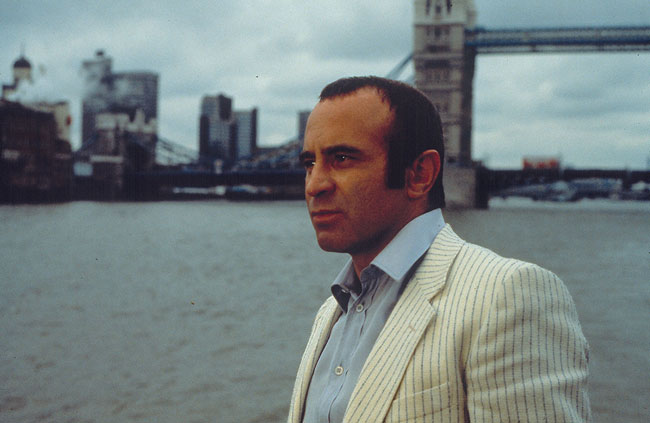
Tower Bridge in London.
Bob Hoskins plays Harold Shand in director John Mackenzie’s gritty gangster drama, an embattled tough guy who finds himself at the top of the criminal underworld. He wants to go legit – to free himself of organised crime and become a respectable businessman and property mogul. But outside parties are not willing to make it easy for him.
When a series of bombs destroy some of his properties, Shand realises someone is wanting him out of the picture. He therefore pursues a bloody path of vengeance, ultimately drawing the wrath of the Provisional Irish Republican Army (IRA).
Courtesy of the Movie Tourist, we can check out some of the locations used in The Long Good Friday.

Harold Shand’s arrival at Heathrow Airport.

The driver’s coffin arrives at Paddington Station.

The Savoy Hotel where Harold pays a visit to his American guests.

The site of “Lion & Unicorn” on Wapping High Street.

St. Katharine Docks

Errol the Ponce gets a visit at 33 Villa Road.

Harold’s yacht is moored at St. Katharine Docks.

15 Catherine Place – the location of Harold’s casino.

The London City Airport now stands here.
If you enjoyed our look at the darker side of London as seen through 10 great movies, you might also like:
The 26 Greatest British Gangster Movies Of All Time

The best British gangster movies of all time including Get Carter, The Long Good Friday, and Lock, Stock and Two Smoking Barrels.